
Due to the fact that prefix style number plates offer such a vast amount of combinations, the possibilities are endless when it comes to making words, names and phrases.
What is a Prefix Style Number Plate?
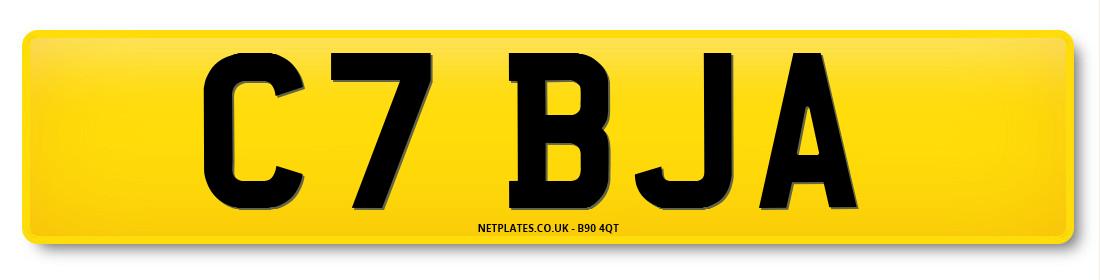
A prefix number plate is defined by a single letter prefix at the beginning of the character sequence (hence the 'prefix plate' name). The prefix letter is immediately followed by a number between 1 and 999, then a space, then three more letter characters. The first letter in a prefix plate (the prefix letter) represents the year of issue, beginning at A, which indicates the year from Aug 1983 to Jul 1984 - the year prefix plates were introduced. The prefix letter then advances through B (1984 - 1985), C (1985 - 1986), and so on. The letters I, O, Q, U and Z were never used as prefixes, so the series ended in 2001, with Y. Here are some examples...
 |
 |
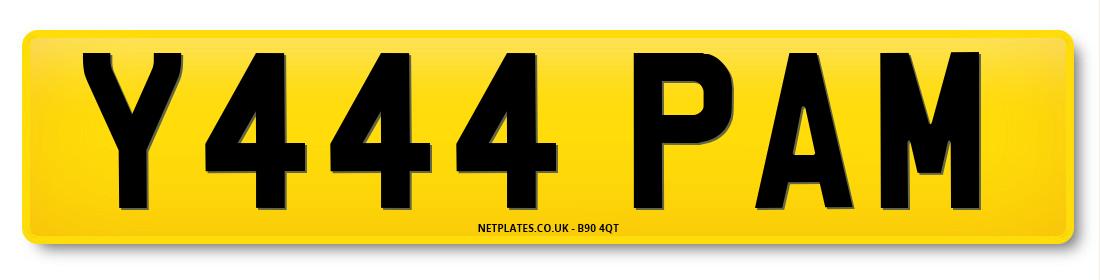 |
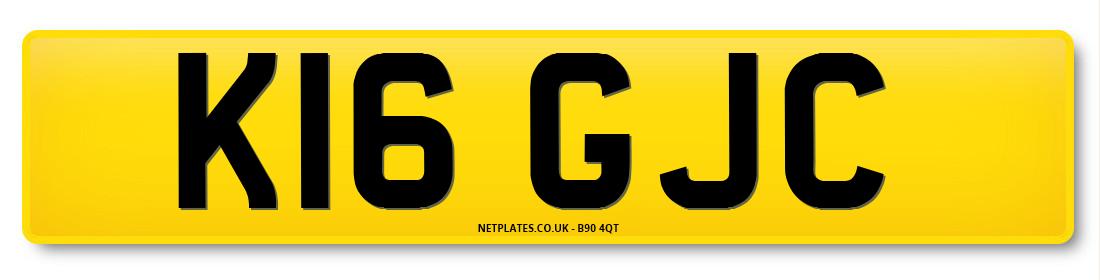
Notice how the example on the left has only five characters. This is the minimum number of characters a prefix plate can have. The variation in the number of characters is caused by the number immediately after the letter prefix. If the number is less than 10, the plate will have only five characters. If it's between 10 and 99, the plate will have six characters. If it's between 100 and 999 it will have seven characters. And you can see all three variants above.
The plate in the middle is interesting, in that it's of the type often confused with current-style registrations. After the prefix letter K, there's a number 16. And some people who only have experience of current plates might interpret a recent year number as the year of the plate. They might, therefore, conclude that K16 GJC is a 2016 plate. And because the year of the plate affects its compatibility, that would mean the could mistakenly believe K16 GJC requires a 2016 vehicle or newer. That's not the case. K16 GJC is a 1992/1993 prefix plate, with much wider age compatibility. The difference is that an actual 2016 plate would have two letter characters before the number 16. And older prefix plate will only have one.
The plate on the right - Y444 PAM - is again recognisable as a prefix plate. One letter, and then a number sequence before the space. This time the reg has seven characters. And it does look quite like a current-style plate. But that single letter before the number starts is the key difference.
The Thinking Behind the Prefix Series
The reason the prefix number plate introduced in 1983 was that the previous suffix series had run out of year letters. A new format was the only solution, and the prefix style was designed as a mirror image of the suffix. Whereas the suffix had a three-letter block, a space, a number from 1 to 999 and a single year letter at the end, like this...
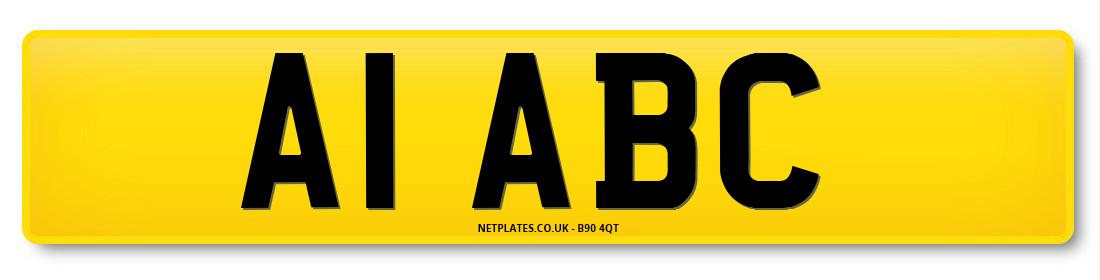 |
The prefix had the exact reverse: year letter, number, space, three-letter block, like this...
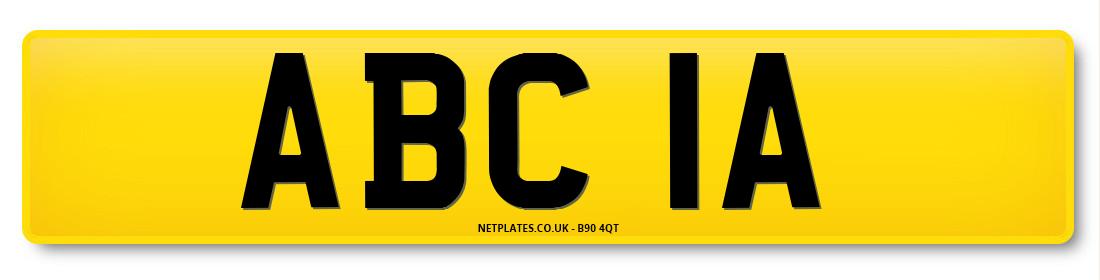 |
As you can see, prefix plates are simply suffix plates with each section displayed in reverse.
Prefix Plate Value
Prefix registrations were able to cover personalisation bases that no previous plate format could reach. For example, the name Jason could be represented in a prefix plate as J4 SON:
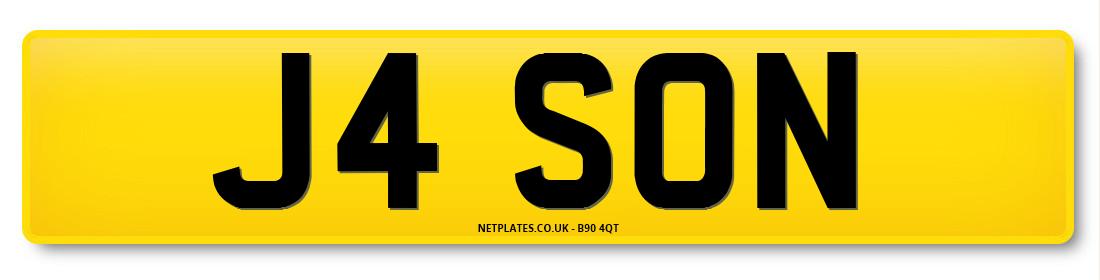 |
Representing the name Jason would be harder in a dateless plate with only numbers at one end - because no number substitutes well with either J or N. Representing Jason in a suffix plate would come closer than the dateless option, because the reg could start with JAS and end with N. But it wouldn't be possible to get JAS 0N, because the lowest number possible would be 1, not 0. Therefore, the nearest matches would arguably be JAS 6N or JAS 9N. Not as convincing as the prefix version, J4 SON.
So prefix plates can often produce an ultimate personalisation, which would reflect in the price. In a nutshell, the value of prefix style number plates can vary considerably depending on the desirability of the registration's character sequences. For example, J4 SON would sell for more than J14 SON, because J4 SON is a closer match with the name JASON.
Two Prefixes Per Year...
Late on in their timeline, prefix number plates also saw the introduction of two year-letters of number plates being released per year. This began with the S series in 1998. And it explains how the format managed to reach Y by 2001
NetPlates offers a vast range of prefix style number plates including many of our own stock so why not get searching now to find your perfect prefix registration number.
Let's conclude with a full table breaking down the year signifiers for prefix style number plates:
Prefix Dates of issue
- A August 1983 - July 1984
- B August 1984 - July 1985
- C August 1985 - July 1986
- D August 1986 - July 1987
- E August 1987 - July 1988
- F August 1988 - July 1989
- G August 1989 - July 1990
- H August 1990 - July 1991
- J August 1991 - July 1992
- K August 1992 - July 1993
- L August 1993 - July 1994
- M August 1994 - July 1995
- N August 1995 - July 1996
- P August 1996 - July 1997
- R August 1997 - July 1998
- S August 1998 - February 1999
- T March 1999 - August 1999
- V September 1999 - February 2000
- W March 2000 - August 2000
- X September 2000 - February 2001
- Y March 2001 - August 2001
For further reading on other number plate formats, you might like to visit some of the following links:
Suffix Number Plates | New Style Number Plates | Dateless Number Plates | Irish Number Plates