


Among the millions of vehicles navigating British roads, few details command immediate respect the way a dateless registration does.
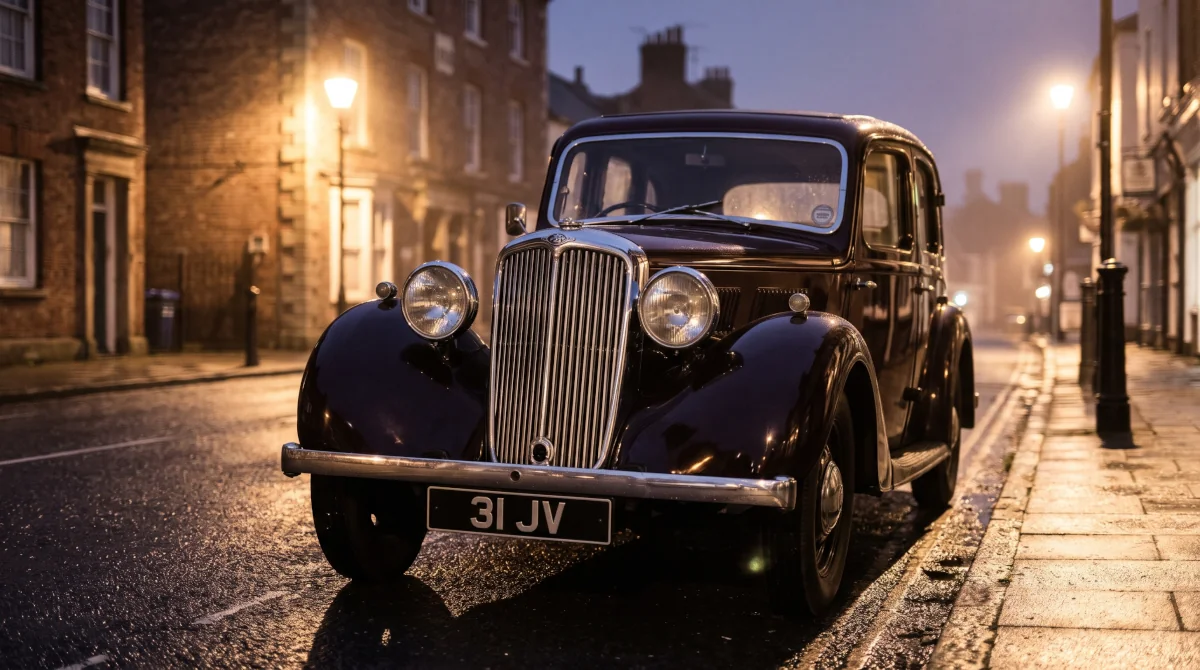
While modern plates relentlessly broadcast the exact six-month window of an automobile's birth, dateless combinations operate entirely outside standard administrative timelines. These historical gems bypass the routine cycle of biannual registration changes, commanding an aristocratic presence across the motoring community.
The prestige they project is neither accidental nor easily bought through showroom spending. It reflects an unbroken link to the dawn of British transport. Understanding why these compact alphanumeric sequences retain such cultural weight requires an examination of the exclusive mechanics of the cherished number market…
The Historical Lineage of Pre-1963 Marks
The lineage of authentic dateless registrations traces directly back to the Motor Car Act 1903, which mandated identification marks across Great Britain beginning in January 1904.
Early allocations paired regional letters—such as 'A' for London or 'S' for Edinburgh—with sequential digits running up to four figures, creating iconic identifiers like the legendary A 1. As traffic surged through the interwar years, licensing authorities increased the character allocations. The letters always came before the numbers - until the 1950s, when unique sequence possibilities began to run out. At that point, The combinations were reversed, with the numbers appearing ahead of the letters.
The era of the dateless plate on the UK mainland concluded outright in 1963, when authorities instituted suffix letters to signal manufacturing years, sealing the original format into the annals of history. And because municipal registers exhausted these early sequences such a long time ago, each surviving pre-1963 registration represents an irreplaceable artefact from Britain's golden motoring age.
The Mechanics of Universal Transferability
Beyond the romance of antiquity, dateless numbers possess a special legal immunity within DVLA regulations.
British law strictly forbids any registration transfer that makes a car, motorbike, van, lorry or what have you appear newer than its documented year of manufacture. This means that modern plates can't be assigned to older, classic vehicles. But dateless marks completely circumvent this restriction because they contain no visible reference to their year of release. That grants them total freedom of transfer across the entire DVLA registry.
You can assign a dateless plate to any year of vehicle.
A vehicle owner can transfer a cherished, mid-century dateless mark onto a modern, high-performance behemoth, without falling foul of DVLA rules. This regulatory immunity ensures that a single registration can remain a perpetual family heirloom or executive identifier, outliving dozens of individual vehicles over several generations.
Visual Economy and Understated Distinction
There's no doubt that the visual presence of a shorter-length dateless plate turns heads.
Standard modern plates bestow seven compulsory characters upon a vehicle. So when a much shorter registration comes along - such as 1 BN or 51 LA - there's an immediate sense of exclusivity. This is one of the reasons that original dateless plates have become so highly prized among experts and celebrities alike.
A concise sequence featuring one or two letters alongside a similar number of numerals just stands out, and observers instantly associate such visions with high status. Unlike contemporary novelty plates that strain through irregular substitutions to spell out names or phonetic puns, original dateless registrations convey their personalisations with supreme impact. The letters are always separated from the numbers - there are no mixed blocks in a dateless plate. So a set of initials, or an abbreviated name - like BOB or RAV - will stand out more.
The Role of Northern Irish Allocations
Any thorough examination of dateless registrations must acknowledge the enduring popularity of Northern Irish cherished plates. While mainland Britain abandoned year-free numbering in 1963, Northern Ireland retained its municipal system incorporating the letters 'I' or 'Z' to denote regional licensing boroughs.
Because the NI registrations remain fully transferable across England, Scotland, and Wales, they provide motorists with a legitimate path to age-free motoring without the four, five or six-figure sums commanded by historic mainland rarities.
NI plates serve the practical function of masking vehicle age whilst retaining the division of letter and numeric blocks. The look is still highly distinctive. You wouldn't mistake an Irish dateless registration like BAZ 6856, with a standard UK mainland plate like BA57 ABC. And the great news is that we at NetPlates are always well-stocked with super-low priced Irish dateless plates. At the time of writing, you'll find a selection starting from base prices of £40 on our budget stock page.
For many drivers, a Northern Irish plate represents an intelligent gateway into dateless ownership, capturing practical timelessness alongside distinctive personal flair. And because it's still possible to get fantastic deals on Irish dateless plates, it's also a very savvy option for people who want optimum value for money.
Market Scarcity and Capital Preservation
The financial appreciation of original, UK mainland dateless registrations stems from an unyielding economic reality: absolute supply inelasticity. While the DVLA generates millions annually by auctioning newly created combinations, it can't manufacture another 1904 or 1930s registration.
In fact, it's not possible to rescue or resurrect any number plate from a scrapped vehicle. If a car in 1955 went to the scrapyard with its dateless plate attached, that registration has gone. So as you can imagine, most original issue dateless plates have disappeared for good. The ones that remain are inevitably going to be valuable.
An Enduring Statement of Autonomy
Ultimately, the kudos commanded by a UK dateless registration rests on the timeless independence it grants both vehicle and driver. Fastened to a contemporary flagship, a dateless reg strips away the ephemeral novelty of the latest biannual release code in favour of permanent gravitas. As automated enforcement and digital uniformity steadily erode individuality on Britain’s road network, these historic plates stand as rare badges of personal autonomy. To display a dateless registration is to carry forward a piece of unbroken motoring heritage, possessing a quiet authority that fleeting automotive fashions can never dilute.